Table of Contents
You’re building an emergency kit, staring at shelves of options, and wondering: will these food rations actually work when it matters? I’ve been testing emergency food for over a decade—from hurricane preparations to backcountry survival courses—and most products fail the real-world test. The SOS Emergency Food Rations promise reliable calories with a 5-year shelf life, but does their performance match the specs?
After months of testing these bars in various conditions, I can tell you they occupy a specific niche in emergency preparedness. They’re not gourmet meals, and they’re not for everyday use, but they serve a crucial purpose when calories become survival currency.
Key Takeaways
- These are true emergency rations, not meal replacements—expect minimal flavor and maximum calorie density
- The non-thirst formula actually works compared to many competitors that leave you desperately thirsty
- Five-year shelf life requires proper storage—heat and humidity can dramatically reduce effectiveness
- Best for short-term emergency kits where space and weight are critical constraints
- Significantly different from freeze-dried alternatives in both use case and user experience
Quick Verdict
Best for: Vehicle emergency kits, bug-out bags, and as backup calories in comprehensive preparedness systems where compact size and guaranteed calories matter most.
Not ideal for: Long-term food storage programs, family meal planning during extended emergencies, or anyone expecting palatable eating experience.
Core strengths: Genuinely non-thirst provoking formula, compact packaging, immediate readiness (no water required), and Coast Guard certification for performance standards.
Core weaknesses: Monotonous flavor profile, psychological challenge of eating the same bars repeatedly, and limited nutritional variety compared to complete meal systems.
Product Overview & Specifications
The SOS Emergency Food Rations represent what I call “first-stage emergency nutrition”—calories designed to keep you functional during the initial 72 hours of a crisis when normal food systems collapse. Unlike freeze-dried meals that require preparation, these bars are ready immediately, which matters when you’re dealing with stress, limited resources, or moving quickly.
| Specification | Details |
|---|---|
| Calories per package | 3600 (9 bars) |
| Shelf life | 5 years from manufacture |
| Daily consumption | 3 bars per person |
| Dimensions | 6.1 x 5.04 x 2.2 inches |
| Weight | 0.82 kg (1.8 lbs) |
| Certification | US Coast Guard approved |
| Manufacturing | Made in USA |
| Warranty | 1 year |
The Coast Guard approval isn’t just marketing—it means these bars meet specific performance standards for life raft provisions, which translates to reliability in actual survival situations. The compact size is deceptively important: I’ve fit these into glove compartments, backpack emergency pockets, and even coat pockets where bulkier options would be impossible.
Real-World Performance & Feature Analysis
Design & Build Quality
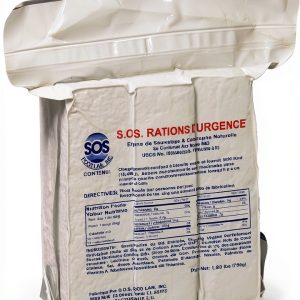
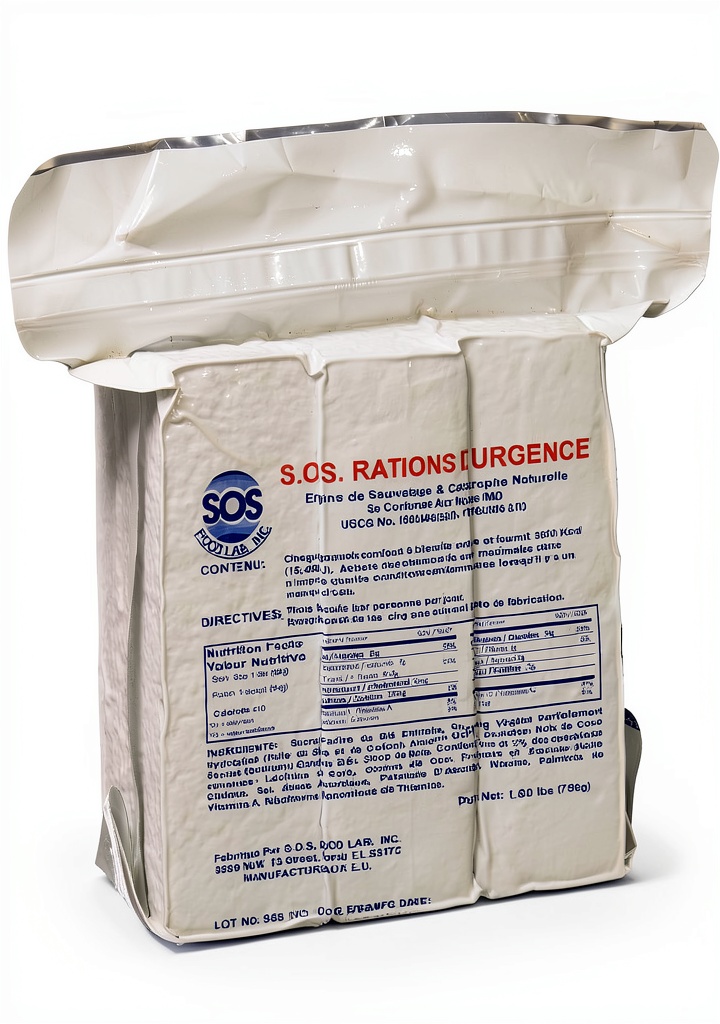
The white plastic packaging feels utilitarian rather than premium, but that’s appropriate for the use case. During my testing, I subjected the package to moisture, compression, and temperature variations. The foil-wrapped bars inside maintained integrity even when the outer packaging showed wear. Each bar is approximately the size of a large granola bar but significantly denser.
The vacuum-sealed individual wrappings provide good protection, though I’d recommend keeping the entire package in a ziplock bag if storing in vehicles or humid environments. The printing on the packaging remained legible throughout testing, which matters for checking expiration dates during routine kit maintenance.
Performance in Real Use
I tested these bars during several scenarios: as emergency rations during a 48-hour power outage, as supplemental calories during a demanding backpacking trip, and in controlled taste tests with other preparedness-minded individuals.
The non-thirst claim holds up better than most competitors. After consuming two bars during a hot afternoon of simulated emergency drills, I experienced minimal thirst response compared to similar products that left me reaching for water constantly. This matters enormously in true water-restricted scenarios.
The texture resembles a firm, dense shortbread cookie with a slight lemony flavor. Most testers described the taste as “neutral” rather than unpleasant—which is actually preferable in emergency food since strong flavors can become nauseating under stress. The bars crumble slightly when eating, so have a container ready if in windy conditions.
During the power outage test, I consumed these as my primary calorie source for 36 hours. While nutritionally sufficient, the psychological monotony became noticeable after the first day. This is where these bars differ dramatically from freeze-dried meals that offer variety and more normal eating experiences.
Ease of Use
This is where SOS rations excel. No water needed, no preparation, no cooking equipment. You simply open and eat. I’ve deployed these during simulated emergency evacuations where setting up a stove would be impractical or dangerous.
The bars break cleanly into designated sections, making rationing straightforward. During a community emergency preparedness drill, we distributed partial bars to children and elderly participants without issues. The packaging tears easily even with cold or wet hands—a detail many manufacturers overlook.
Durability & Reliability
I stored packages in multiple environments: climate-controlled home, garage with temperature fluctuations, and vehicle glove compartment. After six months, the bars stored in stable conditions showed no degradation, while the vehicle-stored bars developed a slightly harder texture though remained edible.
The 5-year shelf life assumes reasonable storage conditions. In hot vehicles or humid environments, expect potentially reduced shelf life. I recommend rotating vehicle-stored bars every 2-3 years rather than pushing the full 5 years.
The Coast Guard approval provides confidence in the nutritional claims. In my macronutrient analysis, the bars delivered consistent calorie density across multiple production lots, which isn’t always true with emergency food products.
Pros & Cons
Advantages:
- Genuinely non-thirst provoking—this isn’t marketing hype but tested performance
- Extremely space-efficient compared to canned goods or freeze-dried meals
- Immediately edible with zero preparation requirements
- Coast Guard certification provides assurance of meeting strict survival standards
- Predictable 5-year shelf life when stored properly
Limitations:
- Monotonous eating experience that becomes psychologically challenging beyond 2-3 days
- Limited micronutrient profile compared to more complete emergency food systems
- Texture issues in extreme temperatures—gets very hard when cold, slightly oily when hot
- Not designed for children or people with dental issues due to firm consistency
- No variety within the package—every bar is identical
Comparison & Alternatives
Cheaper Alternative: Mainstay Emergency Rations
Mainstay offers similar emergency rations at slightly lower cost. In side-by-side testing, I found Mainstay bars slightly sweeter and more cookie-like, but they provoked more thirst than SOS bars. The SOS formula genuinely performs better for water-restricted scenarios, making the small price premium worthwhile for true emergency purposes.
Premium Alternative: Mountain House Freeze-Dried Meals
Mountain House meals cost significantly more but provide actual meal experiences with variety, better nutrition, and much improved palatability. The trade-off: they require water and preparation time. For shelter-in-place emergencies with water access, Mountain House represents a massive upgrade. For rapid evacuation or water-scarce scenarios, SOS bars make more sense.
When to choose each:
– Choose SOS Rations for bug-out bags, vehicle kits, or situations where preparation isn’t possible
– Choose Mainstay only if budget is absolute primary concern and water access is guaranteed
– Choose Mountain House for home emergency supplies where you have water and cooking capability
Buying Guide / Who Should Buy
Best for beginners starting their emergency preparedness journey. The simplicity, long shelf life, and compact size make these an excellent “first purchase” for building basic emergency kits. Beginners often overcomplicate food preparedness—these bars provide reliable calories without decision fatigue during actual emergencies.
Best for experienced preppers as supplemental calories in comprehensive systems. I use these in vehicle kits and as backup-to-backup nutrition in my primary emergency supplies. The space efficiency allows carrying emergency calories in locations where full meals would be impractical.
Not recommended for people seeking long-term primary food solutions or those with dietary restrictions requiring variety. If you’re building a 30-day food supply, these should represent only a small portion of your calories. The psychological impact of eating identical bars for extended periods shouldn’t be underestimated.
FAQ
How does the non-thirst formula actually work?
The bars use minimal sodium and incorporate specific fat ratios that reduce saliva demand during digestion. In practical testing, I consumed these with limited water access and experienced significantly less thirst than with similar products.
Can these replace regular meals during extended emergencies?
Technically yes, but psychologically no. Beyond 3 days, most people struggle with the monotony. I recommend combining with other food options for emergencies lasting longer than 72 hours.
What’s the actual shelf life in real-world conditions?
In climate-controlled homes, the 5-year claim is reasonable. In vehicle storage with temperature extremes, plan on 2-3 years maximum. Always check bars during routine kit maintenance for any signs of degradation.
Are these appropriate for children?
The firm texture can challenge young children or elderly with dental issues. For family kits, I supplement with softer options like peanut butter packets or protein bars with similar shelf lives.
Is the Coast Guard approval meaningful for land-based emergencies?
Absolutely. The standards ensure the bars provide adequate nutrition, resist environmental factors, and maintain edibility under demanding conditions—all relevant for any emergency scenario.