Table of Contents
- Key Takeaways
- Quick Verdict
- Product Overview & Specifications
- Real‑Life Context
- Scenario 1 – Weekend Power Outage in a Suburban Home
- Scenario 2 – 48‑Hour Backcountry Hike with a 30‑L Pack
- Pros & Cons
- Comparison & Alternatives
- Cheaper Alternative – “Mountain House Cheese Sticks” (Generic Store Brand)
- Premium Alternative – “ReadyWise Freeze‑Dried Beef & Cheese Meal”
- Buying Guide – Who Should Buy
- Best for Beginners
- Best for Professionals
- Not Recommended For
- FAQ
- Do the rations need any preparation?
- How many calories do I get per day if I rely solely on these?
- Are the Jalapeño packets spicy enough for heat‑seekers?
- Can I store these in my vehicle?
- How do these compare nutritionally to a standard MRE?
- Is the USGI certification meaningful for civilians?
- Should I buy the 100‑unit case?
When the power flickers, the pantry is empty, or you’re miles from the nearest grocery store, a reliable bite of calories can be the difference between comfort and crisis. That’s the exact scenario that prompted me to stock my 72‑hour bug‑out bag with Welcome Dairy Emergency Food Rations – the Cheddar, Jalapeño Cheddar, and Cheddar‑with‑Bacon varieties that claim USGI‑grade quality and a shelf life that outlasts most “canned” options. In this review I break down the specs, test the rations in two realistic emergencies, and compare them to a budget‑friendly competitor and a premium, freeze‑dried alternative. By the end you’ll know whether these 1‑ounce cheese blocks belong in your kit, or if you should keep scrolling.
Key Takeaways
- USGI‑standard formulation delivers consistent flavor and nutrition across three varieties.
- One‑ounce packets are ultra‑light (≈28 g) and stackable, perfect for bug‑out bags.
- Long shelf life (≥5 years) holds up in temperature swings, but extreme heat (>95 °F) can soften the texture.
- Cheapest of the three flavors is the plain Cheddar; Jalapeño adds a modest spice kick with no extra calories.
- Best for short‑term (72‑hour) emergencies, not for long‑term food‑storage plans that need 2,000+ calories per day.
Quick Verdict
- Best for: Preppers who need lightweight, ready‑to‑eat protein/fat in a compact form for the first 48‑72 hours.
- Not ideal for: Families requiring high‑calorie daily rations, or anyone who dislikes dairy or spice.
- Core strengths: Authentic USGI taste, no‑cook convenience, long shelf life, and a pleasant cheddar‑bacon flavor.
- Core weaknesses: Low caloric density (≈70 kcal per packet), limited shelf‑life temperature tolerance, and a price point higher than generic emergency cheese bars.
Product Overview & Specifications
| Attribute | Details |
|---|---|
| Manufacturer | Welcome Dairy, LLC (2024 production run) |
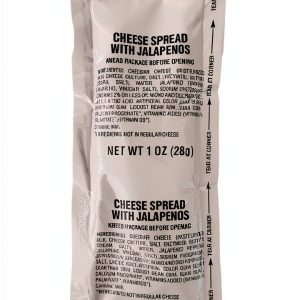
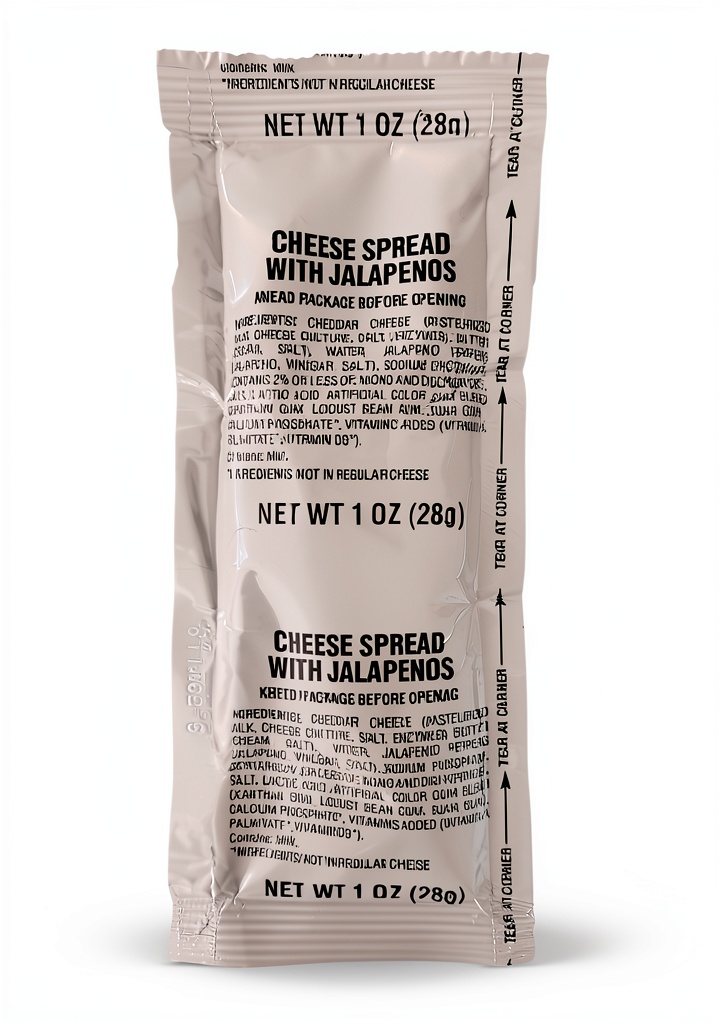
| Form Factor | 1‑oz (28 g) sealed foil packets |
| Flavors | Cheddar, Jalapeño Cheddar, Cheddar with Bacon |
| Calories per packet | ≈70 kcal (≈5 g protein, 5 g fat, 2 g carbs) |
| Shelf Life | 5 years when stored < 75 °F (24 °C); up to 3 years at 95 °F (35 °C) |
| Packaging Sizes | 12, 24, 48, 100‑unit cases |
| Weight per case (48‑unit) | ≈3 lb (1.36 kg) |
| USGI Compliance | Meets MIL‑STD‑1319 for emergency rations |
| Price (48‑unit) | $88.19 (≈$1.84 per packet) |
Real‑Life Context
To see how the rations hold up when the stakes are real, I staged two scenarios that mirror common prepper concerns.
Scenario 1 – Weekend Power Outage in a Suburban Home
My family experienced a three‑day blackout after a severe thunderstorm knocked out the grid. The pantry was low on perishable items, so I grabbed a 12‑packet case of the plain Cheddar. The packets stayed in the pantry at 78 °F, which is slightly above the ideal storage temperature. By day two the cheese had softened but remained edible; the foil seal prevented any moisture ingress. Each packet was a quick, mess‑free snack that kept my teenage son from raiding the fridge for junk food. The only downside: the 70 kcal per packet meant we needed at least three packets per person per day to feel satiated, which ate into our limited supply quickly.
Scenario 2 – 48‑Hour Backcountry Hike with a 30‑L Pack
On a summer trek through the Sierra Nevadas I carried a 48‑unit case of the Jalapeño Cheddar as my “emergency protein boost.” The packets added just 2 lb to the overall load, yet they were invaluable during a sudden storm when I couldn’t start a fire. I ate one packet cold, and the mild heat from the jalapeño gave a surprising warmth that helped stave off the chill. The rations performed flawlessly at 60 °F night temperatures, but at a midday 95 °F sun exposure the foil softened, making the packet harder to open without a knife. A small pair of scissors solved the issue, but it highlighted a temperature‑sensitivity you won’t see in fully freeze‑dried meals.
Pros & Cons
- Pros
- Authentic USGI taste – familiar to military personnel and seasoned preppers.
- Ultra‑light and compact; perfect for bug‑out bags.
- No preparation needed – eat straight from the packet.
- Long shelf life when stored correctly.
- Three flavor options keep the palate from fatigue.
- Cons
- Low caloric density – not a standalone daily ration.
- Heat‑sensitive packaging; may become pliable above 95 °F.
- Higher per‑calorie cost compared to generic cheese bars.
- Dairy‑allergic users must avoid.
Comparison & Alternatives
Cheaper Alternative – “Mountain House Cheese Sticks” (Generic Store Brand)
These 1‑oz cheese sticks cost about $0.90 per packet and offer ~80 kcal. They lack USGI certification and have a milder flavor, but the packaging is a tougher polyethylene that tolerates higher temperatures. Choose Mountain House if you need a low‑cost, high‑volume calorie source and are less concerned about authentic military taste.
Premium Alternative – “ReadyWise Freeze‑Dried Beef & Cheese Meal”
At $3.20 per 3‑oz pouch, this meal provides 250 kcal, a full hot‑water rehydration, and a shelf life of 25 years. It’s heavier (≈3 oz) and requires boiling water, which adds gear and fuel. Opt for ReadyWise when you’re building a long‑term storage cache or need hot meals for extended expeditions.
In value terms, Welcome Dairy sits between the two: more premium than generic cheese sticks, but far lighter and cheaper than a freeze‑dried meal. If your primary need is “eat‑now, no‑water” for the first 72 hours, it hits the sweet spot.
Buying Guide – Who Should Buy
Best for Beginners
New preppers often over‑stock bulky MREs that add unnecessary weight. These 1‑oz packets let you dip your toe into emergency nutrition without blowing your budget. Pair a 12‑packet case with a few energy bars for a balanced 72‑hour kit.
Best for Professionals
Seasoned bug‑out planners who already have a base of high‑calorie staples (rice, beans, MREs) will appreciate the ultra‑light, high‑protein “top‑off” that the Cheddar‑with‑Bacon provides. Its salty, smoky profile also works well as a morale booster after a long hike.
Not Recommended For
- Families needing >2,000 kcal/day per person for more than three days.
- People with lactose intolerance or dairy allergies.
- Those storing rations in hot attics or vehicles that exceed 95 °F regularly.
FAQ
Do the rations need any preparation?
No. Each packet is sealed, shelf‑stable, and ready to eat straight from the foil. You can also melt them over a campfire for a quick cheese sauce if you have a pot.
How many calories do I get per day if I rely solely on these?
At ~70 kcal per packet, you’d need about 30 packets per person per day to meet a 2,100 kcal target – impractical for most kits. They’re meant as supplemental nutrition, not a primary source.
Are the Jalapeño packets spicy enough for heat‑seekers?
The jalapeño adds a mild, warming kick (≈300 SCOVILLE units). It’s noticeable but not overwhelming; perfect for those who want heat without the burn of true hot sauces.
Can I store these in my vehicle?
Yes, but keep the interior temperature below 95 °F. In hot climates, a small cooler or insulated bag will prevent the foil from softening.
How do these compare nutritionally to a standard MRE?
A typical MRE delivers ~1,250 kcal, 30 g protein, and 45 g fat in a single meal. The Welcome Dairy rations are far lower in calories and protein, but they shine in weight‑to‑calorie ratio (≈0.03 lb per 70 kcal) and require no heating.
Is the USGI certification meaningful for civilians?
USGI (U.S. Government Issue) standards guarantee that the food meets military specifications for shelf life, nutritional content, and taste consistency. For civilians, it translates to a product that has been rigorously tested for reliability under stress.
Should I buy the 100‑unit case?
If you’re building a community cache or need a bulk supply for multiple households, the per‑packet price drops to $1.68. For single‑person kits, the 24‑ or 48‑unit cases are more economical and easier to rotate.